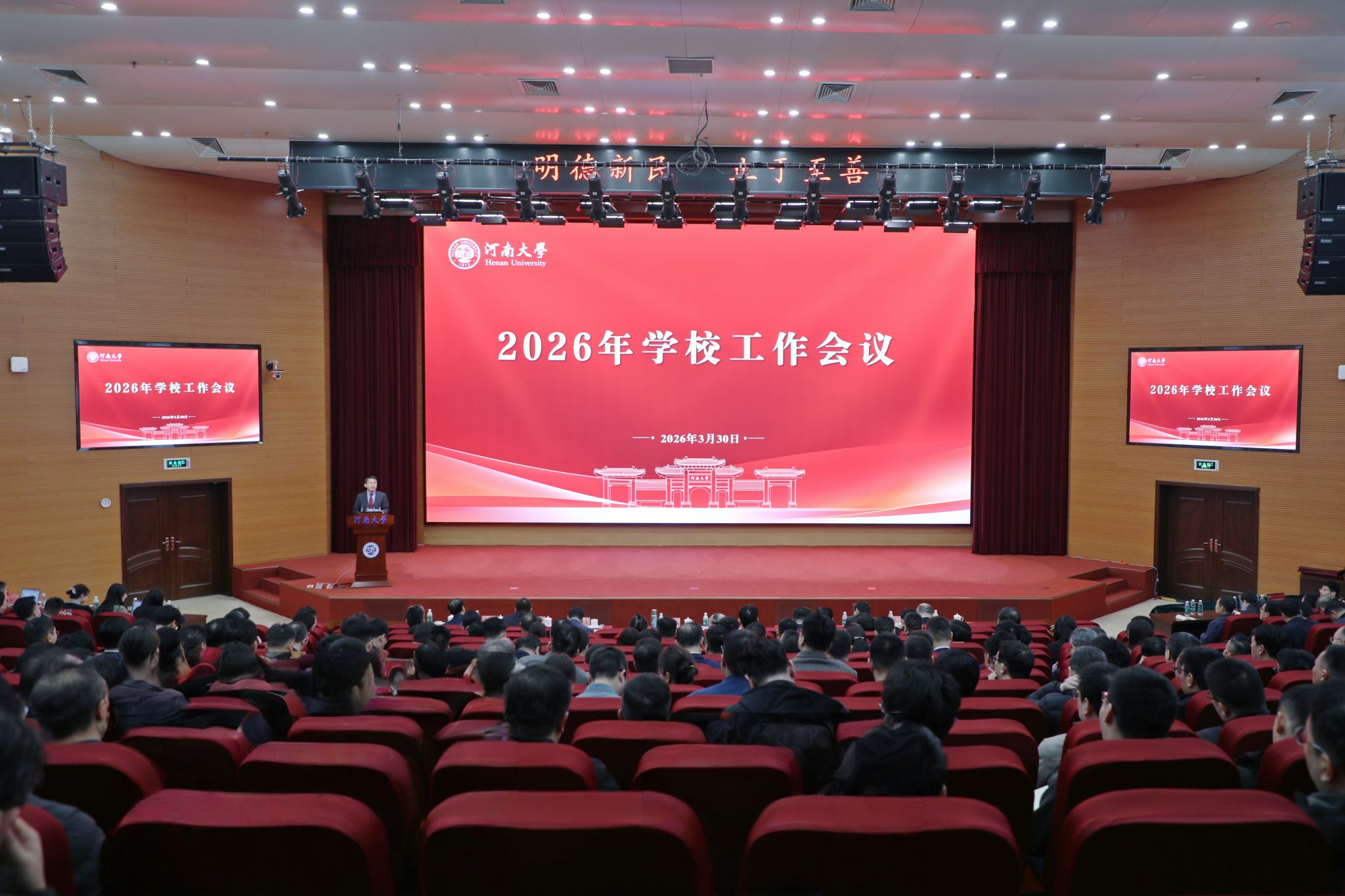
On the morning of March 30, Henan University (HENU) held its 2026 University Work Conference in the lecture hall on the first floor of the library on the Jinming Campus. Zhang Suojiang, President of HENU, delivered the 2026 annual work report. Ji Bo, Secretary of the HENU Party Committee, presided over the meeting and delivered a speech. University leaders, representatives of high-level talents, representatives of non-party individuals, faculty representatives, and administrators at or above the deputy division level attended the meeting.
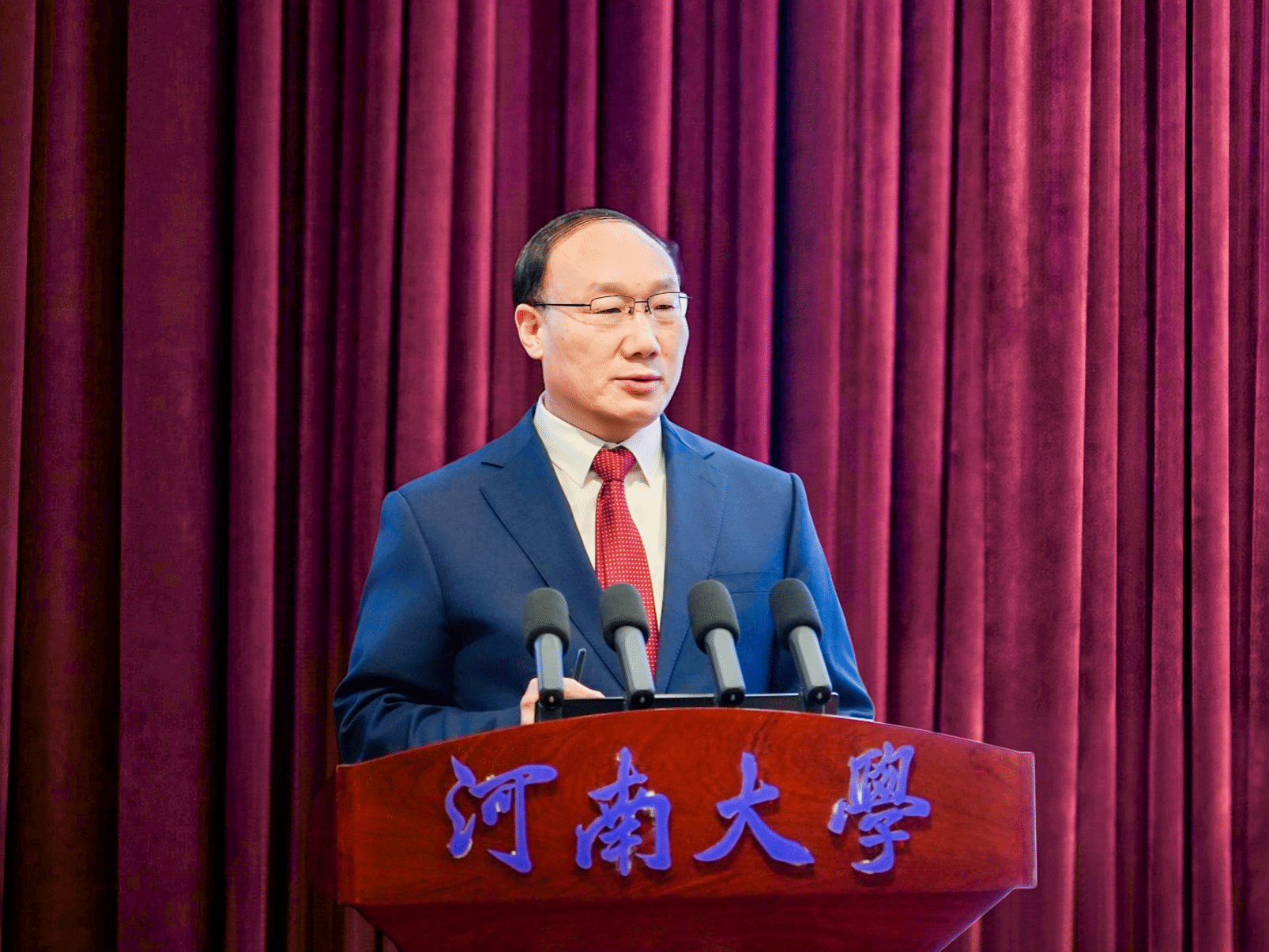
Zhang Suojiang delivered a report titled Unite Efforts to Tackle Key Tasks, Secure Focused Breakthroughs, and Strive to Establish a New Chapter for Building a World-Class University on the Central Plains. He reviewed HENU’s achievements in 2025 and outlined its key tasks for 2026. He noted that in 2025, through the united efforts of faculty and students, HENU achieved several landmark results in education, emerging engineering education, and research innovation. The “seven fundamental transformations” began to show initial results. In recent years, HENU has seized the strategic opportunities of the “Double First-Class” initiative and its role as one of Henan’s “Top Two Universities”. It has broken away from conventional thinking and established a new mindset of doing concrete work, pursuing development, and striving for world-class status. Driven by determination, hard work, openness, and innovation, HENU has cultivated a fertile environment for understanding new situations and resolving new problems. HENU has seen remarkable growth in its overall strength and influence, along with steady progress in its efforts to develop the “Double First-Class” initiative. He stated that given the nation’s attention and the people’s expectations, HENU must live up to its mission. It must take reform, openness, and innovation as its driving forces to create a new pattern for building a world-class university on the Central Plains and address the pressing question of “HENU’s role in scientific and educational innovation”.
Zhang Suojiang emphasized that 2026 marks the start of the 15th Five-Year Plan period and serves as a “year of key breakthroughs” as HENU prepares for a new round of “Double First-Class” initiative. Faculty and students must focus on seven major tasks to strive for a new journey toward a first-class university and open a new chapter of high quality development. First, HENU should accelerate the restructuring of its discipline and program system. HENU should align itself with national strategies, strengthen interdisciplinary integration, and promote the expansion of first-class disciplines. It should accelerate the streamlining, restructuring, and upgrading of its discipline and program structure, promote the full operation of its “9+3” emerging engineering education, and launch research in emerging interdisciplinary fields under the new humanities and new sciences. HENU should also accelerate the transformation of its academic structure toward an integrated model encompassing the humanities, sciences, engineering, and medicine. Second, HENU should optimize the structure of its talent pool. HENU should precisely recruit leading and young talents, appropriately engage in project-based collaboration, and pay particular attention to attracting talents supported by the “Hundred Talents Program” and nurturing outstanding young talents. It should also implement a young talent foundation project, improve performance appraisal, distribution, and promotion mechanisms, unlock talent potential, and build a tiered talent system. Third, HENU should deepen reforms in talent cultivation models. HENU should strengthen ideological and political education, promote the “2+2+N” talent cultivation model, advance AI-based teaching and textbook development, and reinforce practice-based education. It should optimize enrollment and financial aid systems, innovate supervisor selection mechanisms, improve the quality of graduate education, and increase the quantity and quality of Sino-foreign joint educational programs to cultivate interdisciplinary innovative talents. Fourth, HENU should advance the transformation of research paradigms. HENU should improve the orientation toward “quality, performance, and contribution”. It should address real problems, scenarios, and applications with substantive research and genuine efforts. It should also strengthen organized research and the development of national-level research platforms, secure major research projects, build academic hubs, and cultivate new growth areas for strategic emerging industries. Fifth, HENU should continuously expand its funding sources and financial channels. HENU should implement a performance appraisal model that places the school as the main entity and the team as the accounting unit. It should pool resources to achieve breakthroughs in competitive funding, steadily increase faculty and staff income, and build a solid foundation for HENU’s high quality development. Sixth, HENU should continuously improve its governance system. HENU should accelerate its infrastructure and smart campus development, build a smart governance system, cultivate a high caliber administrative team, strengthen its open cooperation network, and ensure security. Seventh, HENU should build a first-class innovation culture and ecosystem. HENU should focus on the future, follow the laws of education and research, strengthen foundational and original innovation, and promote the translation of research results into practical applications. It should remain free from arrogance and impatience, and strive to create an innovation ecosystem and cultural environment that supports dedicated academic pursuit and upward striving.
Zhang Suojiang stated that the revitalization of HENU stems from the joint efforts of all. He called on all faculty and students to follow the guidance of Xi Jinping Thought on Socialism with Chinese Characteristics for a New Era, meet the contemporary requirements for advancing the integrated development of education, science and technology, and talent, and act in accordance with the national strategies for building strength in education, science and technology, and talent. He urged everyone to appreciate the momentum of the nation’s drive to build strength through science and education, foster the ambition of revitalizing HENU, and shoulder responsibilities for the people of Henan, thereby opening a new chapter in building a new and revitalized HENU on the Central Plains.
On behalf of HENU, Ji Bo and Zhang Suojiang commended units that received Grade A ratings in the 2025 performance management assessment and the annual outstanding contribution award. They also signed the 2026 Performance Management Responsibility Agreement and the 2026 Fire Safety Management Responsibility Agreement with representatives of secondary units.
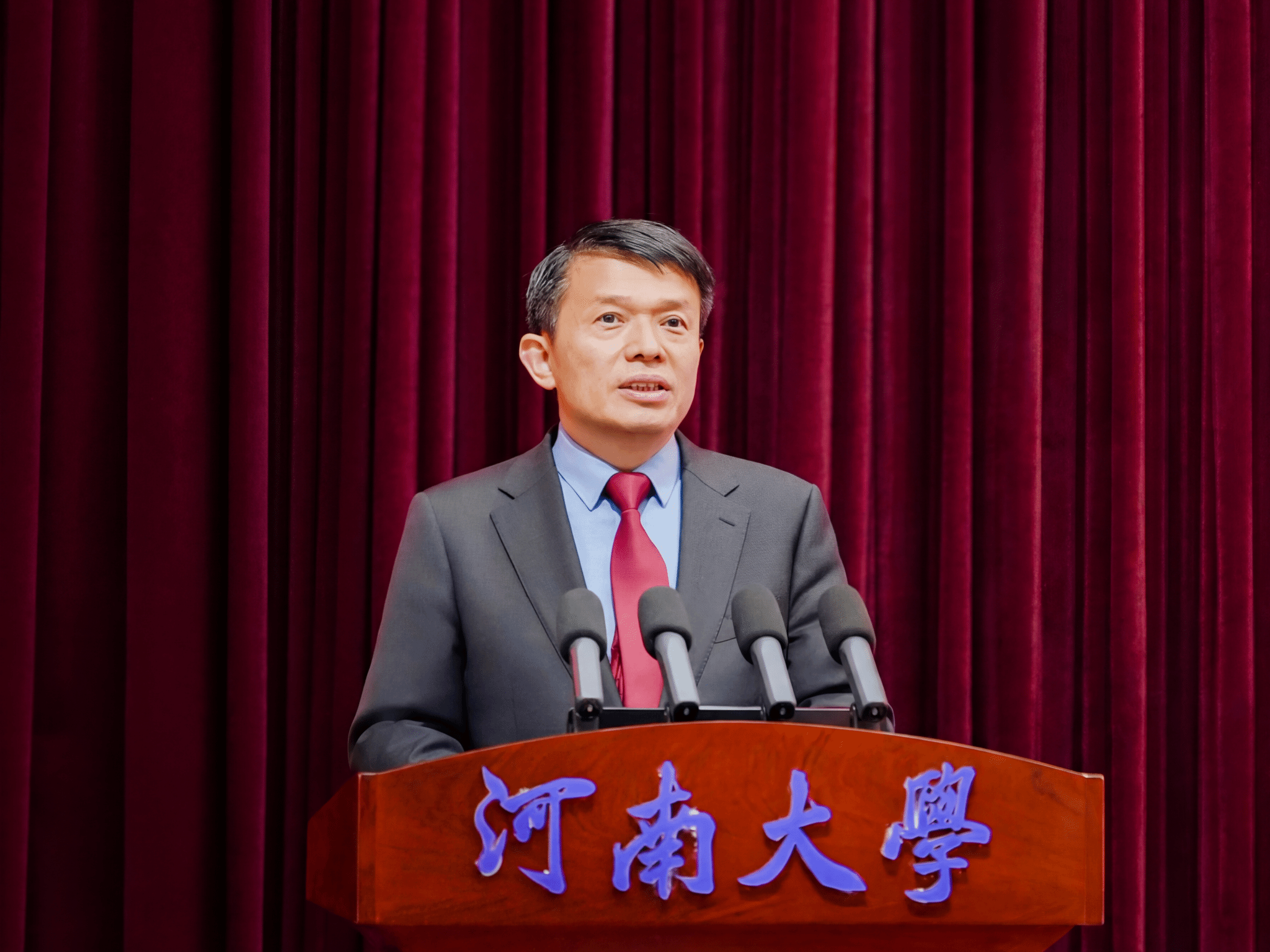
In his concluding remarks, Ji Bo noted that over the past year, under the leadership of the CPC Henan Provincial Committee and People’s Government of Henan Province, HENU had achieved new breakthroughs in all endeavors. He stated that 2026 marks the 105th anniversary of the founding of the Communist Party of China, the first year of the 15th Five-Year Plan, the year when HENU’s comprehensive reforms will be implemented, and a decisive year for HENU to achieve the expansion of its disciplines supported by “Double First-Class” initiative and the sixth round of discipline evaluations. He noted that President Zhang Suojiang’s work report outlined pragmatic measures and charted the course. This meeting was not only a review and planning session but also a mobilization for reform, a resolve to tackle key tasks, and a call to secure breakthroughs. He called on everyone to work together to succeed in this decisive endeavor.
Ji Bo emphasized the need to focus on “reform, tackling key tasks, innovation, and breakthroughs” to ensure a strong start to the 15th Five-Year Plan. He put forward four key proposals. First, he called for a shared vision and a common goal. HENU should aim for the next round of the “Double First-Class” initiative, supported by the “1249” system, and deepen a comprehensive and coordinated reform framework. Second, he urged everyone to recognize the situation, face challenges, and strengthen confidence. He stressed the importance of a mindset that falling behind, moving slowly, or failing to innovate mean losing ground. HENU should seize the opportunity as one of the first comprehensive reform pilot institutions under the Ministry of Education. Guided by the principle that comprehensive reform is the foundation and discipline breakthroughs are the expected outcome, all faculty and staff should embrace the reforms and channel their efforts toward development. Third, he called for clear responsibility, effective methods, and a sense of duty. HENU should adopt a correct view of performance, strive for development space through solid work, improve efficiency through scientific methods, and address the pressing questions of “HENU’s role” and “the role of its administrators”. Fourth, he urged everyone to build consensus, transform work styles, and shoulder the mission. He noted that breakthroughs in disciplines depend on personnel, and more specifically on administrators and their work styles. He called for ideological awareness to guide action, stronger capabilities to drive progress, and faster implementation to deliver results. He called for collaboration across HENU to break down departmental barriers and forge a cohesive, coordinated approach.
Ji Bo emphasized that all members of HENU must focus on reform, hard work, innovation, and breakthroughs. Everyone should do their part and pool their strengths to accomplish this critical mission and contribute to the revitalization of the century-old HENU and the construction of a strong education nation.

 News /
Content
News /
Content